
The Future of Smart Cities in East Africa
East Africa’s cities are evolving rapidly, driven by population growth, digital transformation, and rising infrastructure demands. This insight explores how smart city systems can reshape transport, energy, governance, and urban living to create more efficient, sustainable, and connected cities across the region.
6/22/20265 min read
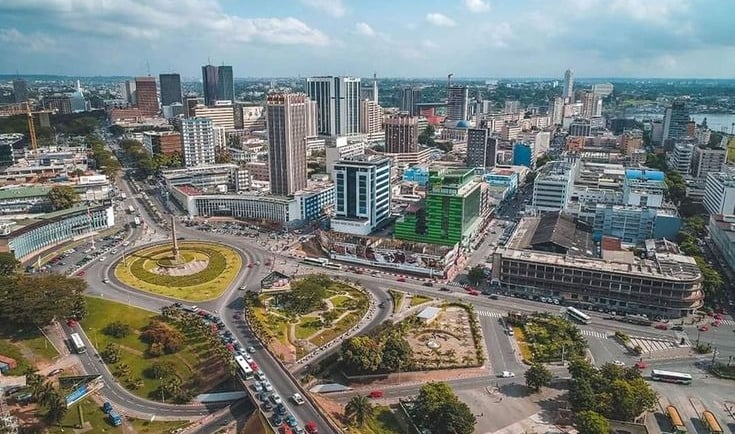
East Africa is entering a decisive urban century. Cities are growing faster than infrastructure can comfortably keep up, and governments, investors, and private sector players are being pushed to rethink how urban spaces are designed, managed, and experienced. In this unfolding transformation, the concept of smart cities is no longer a distant ambition. It is becoming a practical framework for solving real challenges across transport, housing, energy, governance, and service delivery.
From Kampala to Nairobi and beyond, East Africa is beginning to explore how digital systems, data intelligence, and integrated infrastructure can reshape the urban experience. The future city will not simply be built from concrete and steel, but from networks, sensors, platforms, and systems that respond dynamically to human activity.
Understanding What a Smart City Really Means
A smart city is often misunderstood as a highly futuristic, technology-heavy environment filled with automation and artificial intelligence. In reality, the concept is more grounded. A smart city is an urban system that uses data and technology to improve efficiency, sustainability, and quality of life.
This includes intelligent traffic systems that reduce congestion, digital public service platforms that streamline government interaction, smart energy grids that optimize power distribution, and data-driven planning systems that guide infrastructure development.
At its core, a smart city is not about technology for its own sake. It is about coordination. It is about making urban systems communicate with each other so that cities function more efficiently and respond more effectively to the needs of their populations.
The Urban Pressure Driving Change in East Africa
East African cities are growing at a pace that presents both opportunity and strain. Populations are expanding rapidly, rural-to-urban migration continues, and economic activity is increasingly concentrated in urban centers.
Cities such as Kampala, Nairobi, and Dar es Salaam are experiencing rising demand for housing, transport, water, sanitation, and energy. In many cases, traditional infrastructure systems are struggling to keep up.
Traffic congestion has become a daily reality in major urban centers. Informal settlements are expanding due to housing shortages. Public services are often constrained by manual systems that limit efficiency and transparency. These pressures create an urgent need for smarter planning and more adaptive infrastructure models.
The Role of Digital Infrastructure
One of the defining pillars of smart cities is digital infrastructure. This includes broadband connectivity, mobile networks, cloud systems, and data platforms that allow urban environments to function as interconnected ecosystems.
In East Africa, mobile penetration has already created a strong foundation for digital transformation. Mobile money systems, digital banking, and app-based services have shown how quickly populations can adopt technology when it directly improves daily life.
The next step is integrating these digital capabilities into urban management systems. For example, traffic flow data can be used to optimize road usage in real time. Public transport systems can be synchronized with demand patterns. Waste collection can be scheduled dynamically based on usage data rather than fixed routes.
This shift transforms cities from reactive systems into predictive ones.
Smart Mobility and Transport Systems
Transport is one of the most visible challenges in East African cities. As populations grow, congestion increases, productivity declines, and environmental pressure intensifies.
Smart mobility solutions offer a pathway forward. These include intelligent traffic lights, GPS-enabled public transport systems, digital ride-sharing platforms, and integrated transport data systems that help planners understand movement patterns.
In a smart city model, transportation is no longer managed in isolation. It is connected to housing, employment centers, and commercial zones in a unified system that prioritizes efficiency and accessibility.
For rapidly expanding cities like Kampala, these innovations are not optional. They are essential for maintaining economic competitiveness and livability.
Energy, Water, and Urban Sustainability
Smart cities also rely heavily on sustainable resource management. Energy grids become more efficient when they can balance supply and demand dynamically. Water systems become more resilient when they are monitored in real time for leaks, usage patterns, and distribution efficiency.
East Africa’s rapid growth means that demand for resources is increasing faster than traditional systems can expand. Smart infrastructure provides a way to optimize existing capacity while planning for long-term expansion.
Solar integration, smart meters, and decentralized energy systems are already emerging across the region. These technologies reduce waste, lower costs, and improve reliability for households and businesses alike.
Governance and Digital Public Services
One of the most transformative aspects of smart cities is the digitization of governance. When public services are moved onto digital platforms, efficiency increases and corruption risks can be reduced through transparency and traceable systems.
Digital land registries, online licensing systems, and e-government platforms are gradually being introduced across East Africa. These systems simplify processes that previously required significant time, paperwork, and physical presence.
For citizens and businesses, this shift reduces friction. For governments, it improves data visibility and decision-making capacity.
The long-term vision is a city where most public interactions can be completed digitally, supported by secure, interoperable systems.
The Role of Private Sector and Investment
Smart city development is not solely a government initiative. It requires strong participation from private investors, technology companies, infrastructure developers, and service providers.
Investment opportunities exist across multiple layers of the smart city ecosystem. These include telecommunications infrastructure, data centers, urban housing developments, logistics systems, renewable energy projects, and mobility platforms.
Private sector involvement is particularly important in East Africa, where public resources alone are often insufficient to fund large-scale transformation. Strategic partnerships can accelerate development and introduce innovation at scale.
For holding companies and diversified investment groups, smart city development represents a convergence of infrastructure, technology, and real estate opportunities.
Challenges to Implementation
Despite its potential, the smart city model faces several challenges in East Africa.
High upfront investment costs can slow adoption. Limited technical capacity in some areas can hinder implementation. Data governance frameworks are still developing in many countries. Additionally, ensuring inclusivity is critical, as digital systems must serve both formal and informal urban populations.
There is also the challenge of integration. Many urban systems currently operate independently, making coordination complex. Transitioning to integrated platforms requires careful planning and phased implementation.
However, these challenges are not barriers. They are design considerations that shape how smart cities must evolve in the African context.
The Future Urban Model for East Africa
The future of East African cities will not be defined by a single technological breakthrough. It will be shaped by gradual integration of systems that make urban life more efficient, sustainable, and responsive.
Cities will increasingly operate as data-driven ecosystems. Infrastructure will be designed with adaptability in mind. Public services will become more accessible through digital platforms. Transport, energy, and housing systems will become more interconnected.
In this future, cities like Kampala will evolve from traditional urban centers into dynamic, intelligent environments capable of supporting larger populations and more complex economic activity.
Conclusion
Smart cities represent one of the most important development frontiers in East Africa. They offer a pathway to solving some of the region’s most persistent urban challenges while unlocking new opportunities for growth, innovation, and investment.
The transition will not happen overnight. It will require vision, coordination, and sustained investment across both public and private sectors. But the direction is clear.
The future city is not just built. It is connected, intelligent, and continuously evolving.
For organizations like Velamar Holdings, this transformation represents more than an infrastructure trend. It is a long-term opportunity to participate in shaping the systems that will define how East Africa lives, moves, and grows in the decades ahead.
Contact
Reach out to Velamar Holdings anytime.
Phone
info@velamarholdings.com
+256 778 906 829
+256 753 171 363
© 2026. All rights reserved.
Velamar Holdings Company Limited